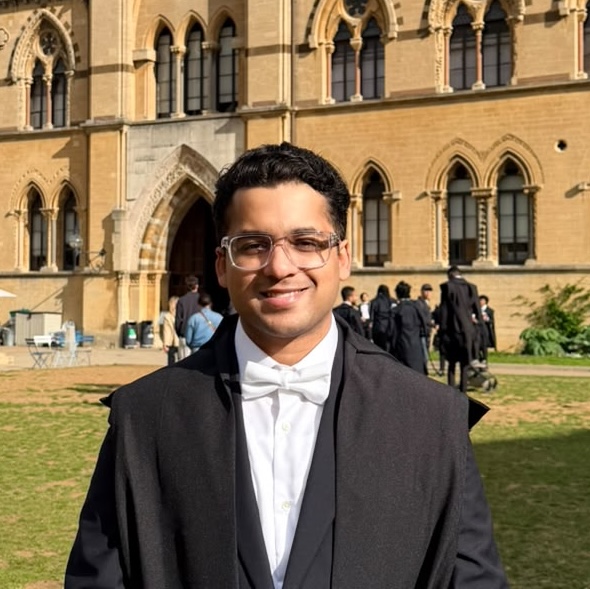
 Ketan Suhaas
About
I am a doctoral student at the Oxford Protein Informatics Group (OPIG), University of Oxford, supervised by Prof. Garrett M. Morris and Prof. Charlotte Deane MBE FRS. I work on structure-based drug discovery: finding new ways to virtually screen vast small-molecule libraries and to dock candidates into protein pockets, with one rule I care about: every molecule must be synthesizable from real, purchasable building blocks. I think of design as learning policies that assemble the dream molecule step by step.
Before Oxford, I was the Founding Research Scientist at dCortex, building reasoning models, computer-use agents, multi-agent systems, and constraint optimizers for enterprises. I contributed to the pitch and deck behind our multi-million round from Bessemer Venture Partners, backers of Anthropic.
I hold an MS in Artificial Intelligence from Boston University, where my thesis on active feature acquisition was advised by Dr. Vijaya B. Kolachalama, and a B.Tech in Electrical Engineering from Indian Institute of Technology (IIT) Roorkee. I have also done research at Harvard’s Implicit Social Cognition Lab with Prof. Mahzarin Banaji.
My work has appeared at ICML, CVPR, ACL Findings, npj Dementia, and PNAS.
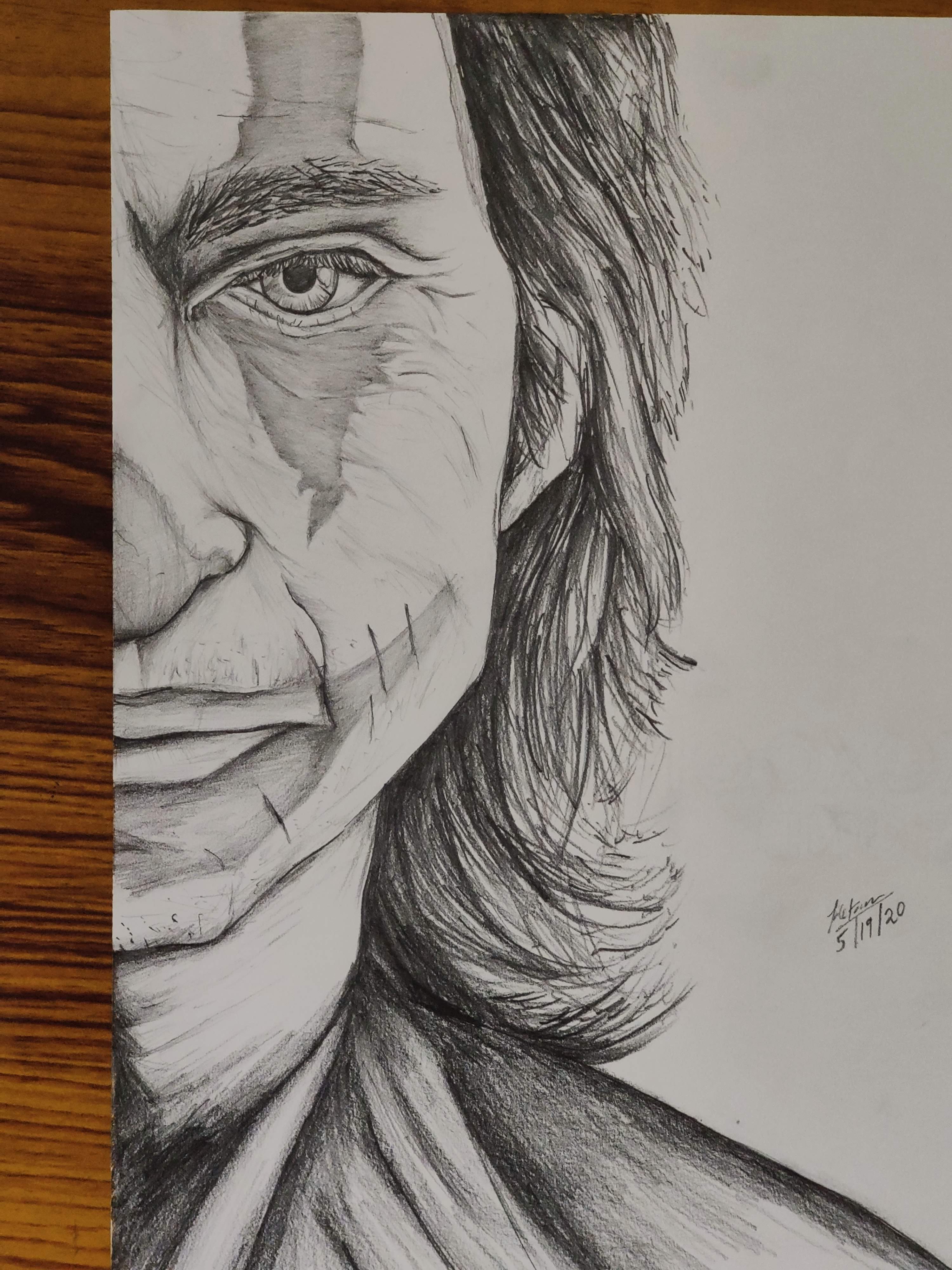
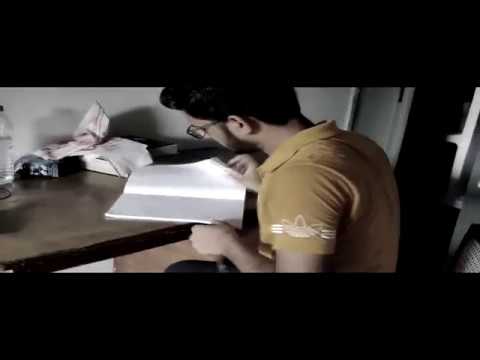
Outside research, I play piano, Carnatic violin, and guitar, and sing; I draw, paint, and make short films; I play tennis, sprint, and powerlift; and I enjoy speed cubing and competitive gaming. See more in Beyond Research.
Active feature acquisition via explainability-driven ranking
Explainability-driven feature ranking for active feature acquisition, with 1–10% gains across 9 clinical datasets.
Read paper ↗Progressive prompt detailing (SCoPE)
Dynamic coarse-to-fine prompt refinement for text–image alignment, improving on Stable Diffusion for 83% of benchmark samples.
Read paper ↗Kernels of selfhood
GPT-4o shows humanlike patterns of cognitive dissonance moderated by free choice, across 900+ trials.
Read paper ↗My Story
As a kid, I built the things I didn’t have, mostly out of cardboard, paper, wood and tape. I was always in the middle of some project. I loved physics, but I chose engineering because I wanted to build things with my hands.
I studied Electrical Engineering at IIT Roorkee, where I came across Andrew Ng’s deep learning lectures. I was fascinated that learning itself could be built, and that it used the same linear algebra, calculus and optimization I already enjoyed in my degree. Around the same time, I lost interest in discrete maths and competitive coding.
When I discovered AI, the first application I thought of was healthcare, and I have seen it as the most important one ever since. My undergraduate thesis was on segmenting cardiac MRI scans. At Boston University, I joined the Kolachalama Lab and worked on neurodegenerative diseases, building models for medical diagnosis. That work got me interested in the brain, and then in the mind more broadly, which led me to work with Prof. Mahzarin Banaji at Harvard on whether GPT-4o shows cognitive dissonance the way humans do.
Over time, I wanted to work on more fundamental research. The more I learned, the more I felt the depth, importance and complexity of biology, and I was drawn to drug discovery, where I felt the impact could be larger.
The 2024 Nobel Prizes made this feel real. The Physics prize recognised foundational work on neural networks, and the Chemistry prize recognised protein structure prediction and protein design. It showed me that deep learning could make a real difference in the life sciences.
In 2025 I went into startups, to learn how they are built and to learn more about myself. I’m now at Oxford, working on deep learning for drug discovery, with a focus on designing molecules that can actually be made.
Publications & Preprints
Author names in publication order. Bold = this page’s author. Full list on Google Scholar.
-
Domain-adapted language model using reinforcement learning for various dementias
Nature Communications · under review -
The Inner Monologue of Language Models: When Reasoning Traces Reveal More Than They Hide
ACL Findings ’26Mentored collaboration with the IIT Roorkee Vision Language Group.
-
Conditional mutual information-guided reinforcement learning for active feature acquisition
IEEE TAI · under review -
Mask-space distributionally robust optimization for learning under stochastic missingness
ICLR ’27 · under review -
Contrastive representation learning for instance-adaptive active feature acquisition
TMLR · under review
Talks & Presentations
| Jul 15, 2025 | Poster, ICML 2025, Vancouver. Active feature acquisition via explainability-driven ranking. |
| Jun 12, 2025 | Oral & poster, AI for Content Creation Workshop, CVPR 2025, Nashville. SCoPE: progressive prompt detailing for diffusion models. |
| Jun 11, 2025 | Poster, 3rd Workshop on Generative Models for Computer Vision, CVPR 2025, Nashville. |
| May 17, 2025 | Master’s thesis defense, Boston University. Active feature acquisition for efficient and transparent medical diagnoses. |
CV
View the latest version of my curriculum vitae.
Notes
A growing set of notes and blog posts on the mathematics and theory behind deep learning.
Press & Coverage
Coverage of Lehr, Saichandran, Harmon-Jones, Vitali, & Banaji (PNAS 2025), on humanlike cognitive dissonance in GPT-4o.
- PsyPost (Jun 2025). ChatGPT mimics human cognitive dissonance in psychological experiments.
- Neuroscience News (May 2025). LLMs mimic human cognitive dissonance.
- Tech Xplore (May 2025). GPT-4o exhibits humanlike cognitive dissonance.
- Binary Verse AI (2025). AI Cognition: GPT-4o’s Shocking Self-Reflection Uncovered.
- YouTube (2025). AI Cognition Gets Weird: GPT-4o Writes a Biased Essay, Then Changes Its Beliefs.
- Phys.org & X (May 2025). broader social-media discussion following the paper’s release.
Coverage of Saichandran et al., SCoPE (CVPR 2025), on progressive prompt detailing for text-to-image models.
- Runway Research. paper featured on the Runway research publications page.
- Keepler AI & K News #31 (LinkedIn, 2025). SCoPE highlighted in curated AI research newsletter.
Beyond Research
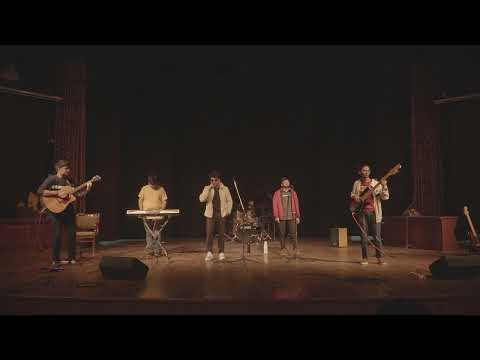
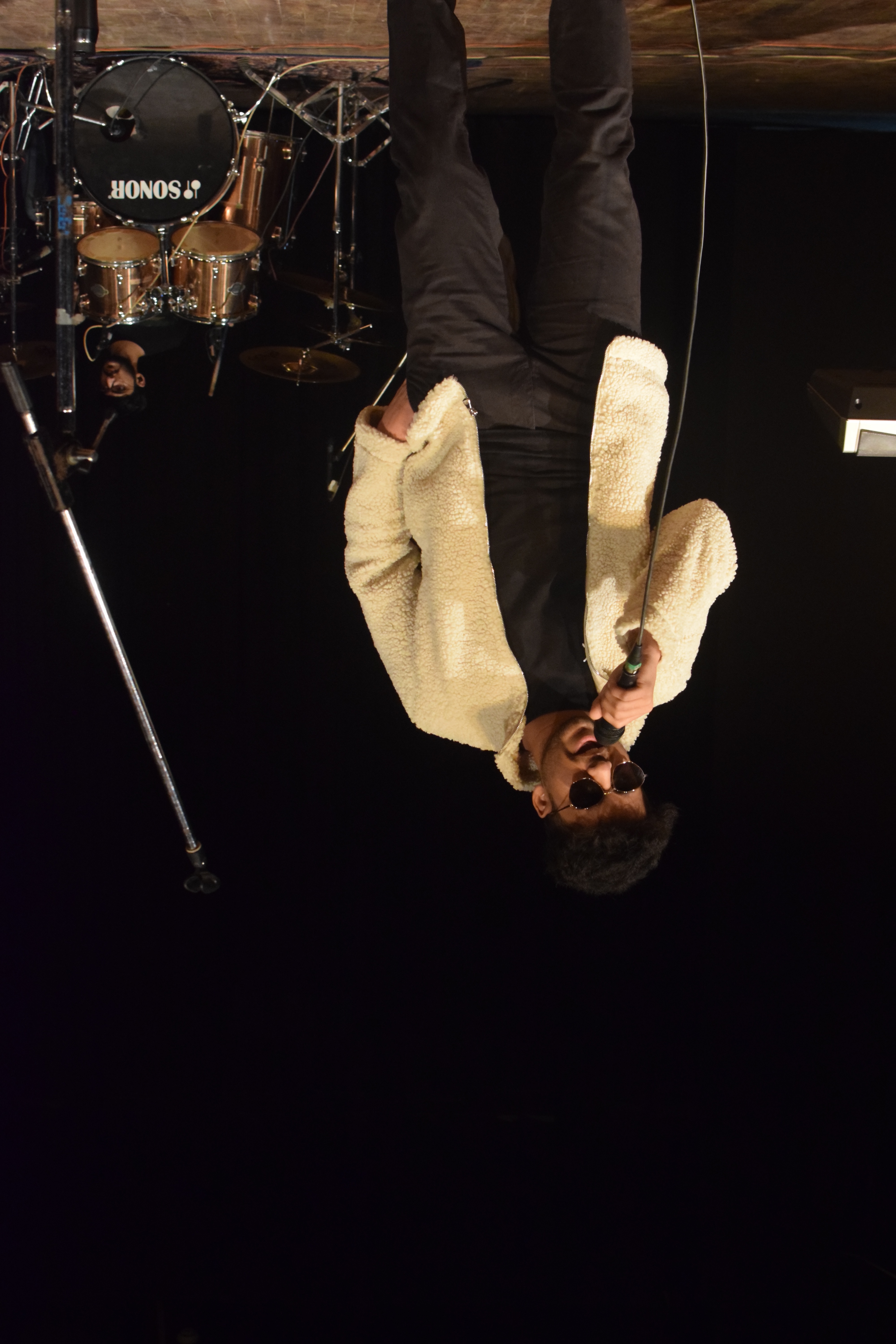
Music
Piano (main instrument) · Carnatic violin · guitar · singing
Sport
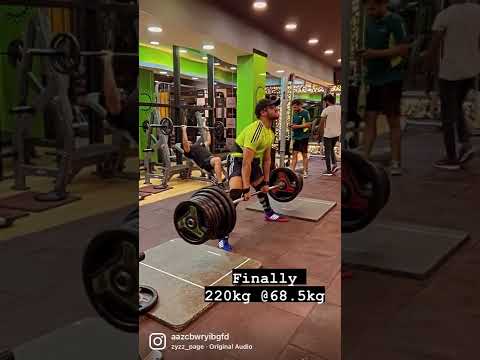
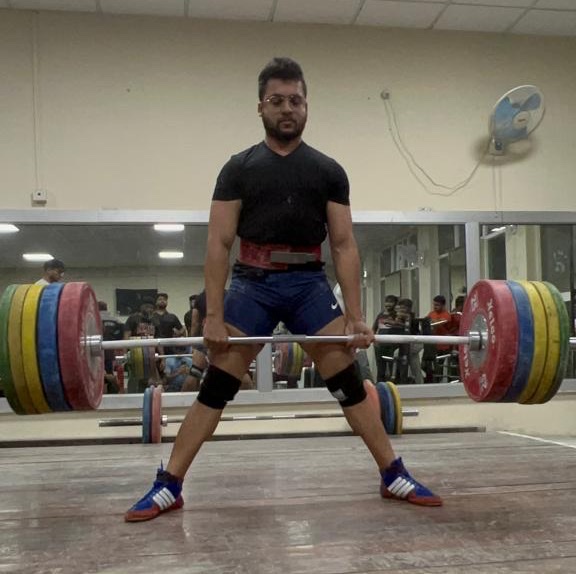
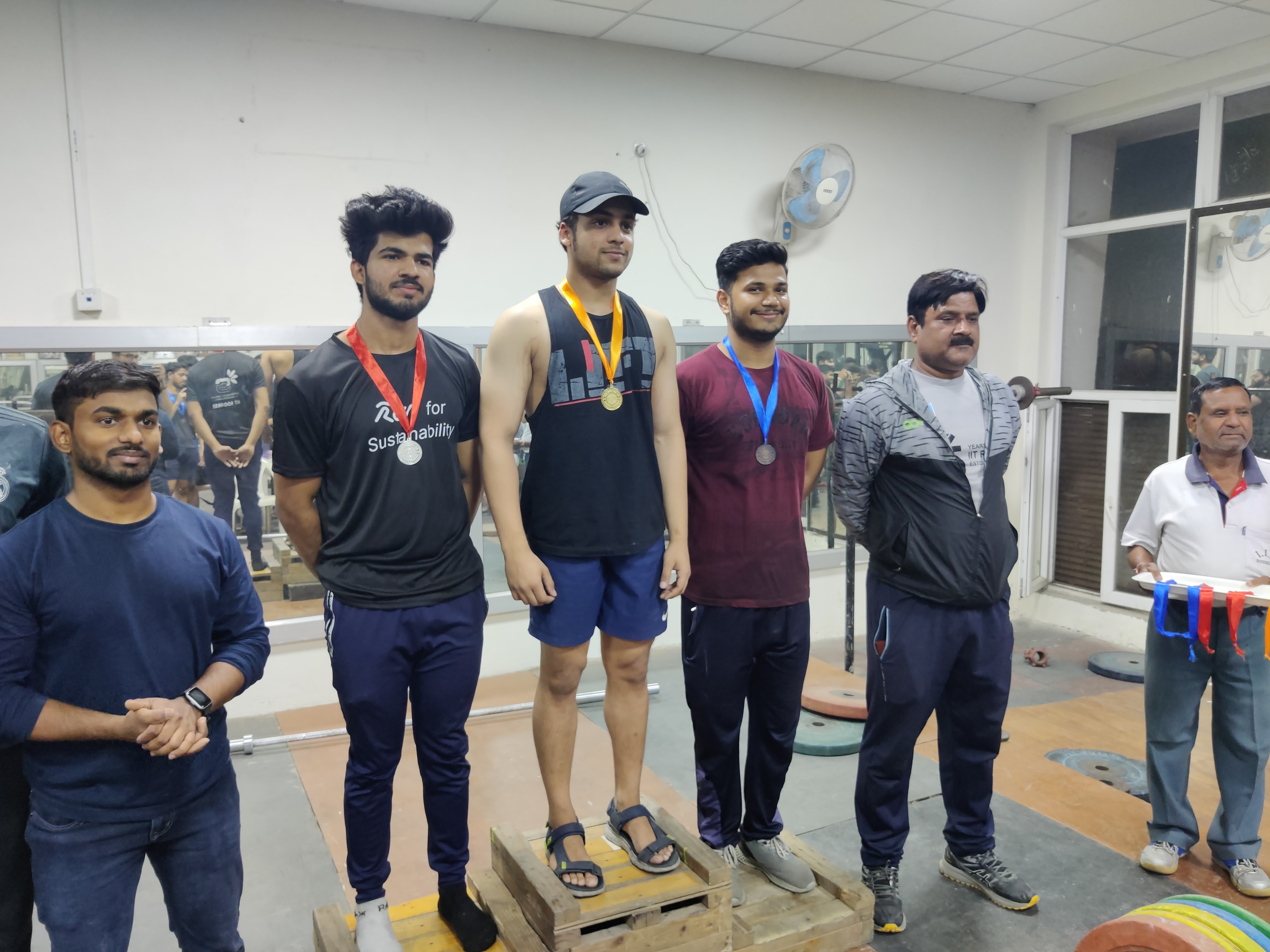
Tennis (national level) · sprinting (100 m under 12 s) · powerlifting (220 kg deadlift, 160 kg squat, 95 kg bench; intra-collegiate champion two years running)
Games & tinkering
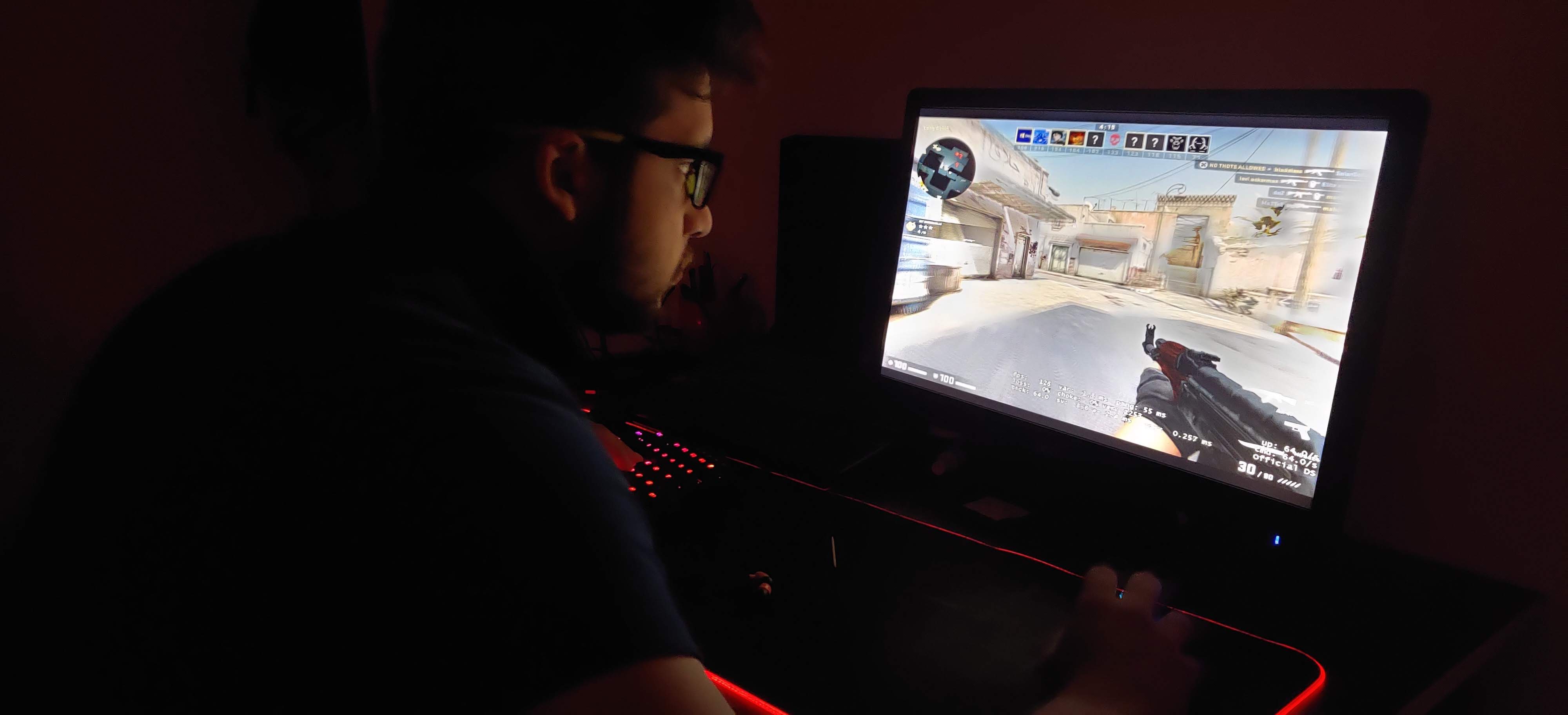
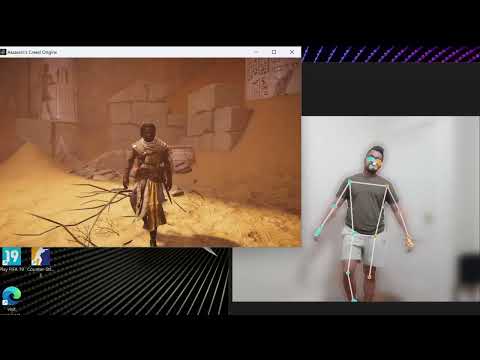
Counter-Strike · Valorant · speed cubing (3×3 under 15 s)
Art & cinema
Pencil portraits and drawing · short-film making
Languages
English, Hindi, Tamil, Telugu (fluent) · Sanskrit (reading) · Japanese (JLPT N4)
Last updated October 2026.